SlimMind
Special Report
Women's Wellness Research
14 min read

Special Report

The Real Reason You Can't Keep
the Weight Off Has Nothing
to Do With Food

New research from one of the world's largest health studies reveals a hidden mechanism that makes lasting weight loss neurologically impossible for millions of women — until one specific thing changes.

Image 01 — Hero

Her name was Claire.

She was 41, a secondary school teacher, and she had lost the same 35 pounds four times.

The first time was with Weight Watchers. She counted every point, walked 10,000 steps daily, and lost the weight over seven months. She felt incredible. She told herself this time was different.

Eight months later, she had gained it all back, plus four more pounds.

The second time was a low-carb diet she found online. She was rigorous, disciplined, almost obsessive. Lost 38 pounds in five months. Her colleagues noticed. Her husband told her she looked beautiful. She noticed something strange in herself when he said it — a faint but unmistakeable feeling of unease. Not happiness. Unease.

She regained it within six months.

The third time was a personal trainer, three sessions a week, meal prep on Sundays. The most expensive attempt. She lost 30 pounds over nine months. Then her mother became ill. Then there was a stressful term at school. Then there was Christmas.

The fourth time she didn't even make it to a loss. She started. She stopped. She told herself she lacked willpower. She told herself she was weak. She told herself the painful, private, deeply-held thing that millions of women carry in silence:

"Something is wrong with me."

If you've been nodding along — if parts of Claire's story feel less like a story and more like a mirror — then what you're about to read may be the most important thing you've encountered in your struggle with your body.

Because Claire's problem was never food. It was never willpower. It wasn't even her body.

Image 02 — Recognition

For millions of women, the pattern is identical. The details change. The loop doesn't.

Section One

The Discovery Nobody
Told You About

In the 1980s, a physician named Dr. Vincent Felitti was running one of the most successful obesity clinics in the United States.

His weight loss programme was working — by every metric that should matter. Patients were losing weight. Significant weight. Consistently.

And then something strange began to happen.

The patients who were losing weight the fastest — the ones achieving the most dramatic results — were also the ones most likely to suddenly drop out of the programme. Not plateau. Not slow down. Disappear completely.

When Dr. Felitti's team tracked them down and asked what had happened, the answers stopped him cold.

One woman had lost 40 pounds in four months — then regained it all in three weeks. When she described her experience after the weight loss, she said something Dr. Felitti had never heard in a clinical context:

"When I was overweight, men didn't look at me. Now they do, and I can't stand it. The weight made me feel safe."

Another patient — a woman who had been sexually assaulted at 23 — described her weight as a barrier. "I don't have to think about any of that when I'm like this. When I started losing weight, I started thinking about it again."

Dr. Felitti didn't dismiss these accounts. He did something that would change the course of his career and, eventually, public health research forever. He started asking every patient in his clinic about their childhood.

What he found became the foundation of the largest public health study ever conducted on the relationship between childhood experience and adult health outcomes. It is called the ACE Study — the Adverse Childhood Experiences Study — and it was conducted in partnership with the Centers for Disease Control.

The results were staggering.

Image 03 — The Discovery
Section Two

What the Largest Health Study
in History Found

The ACE Study analysed data from over 17,000 participants. It asked questions nobody had thought to ask at scale before: What had happened to these people in childhood? And was there a measurable connection between those experiences and their health as adults?

The answers confirmed what Dr. Felitti had seen in his clinic — but on a scale that was almost incomprehensible.

6M+

obese Americans estimated to have experienced childhood abuse (CDC ACE Study)

more likely to develop food addiction after childhood physical or sexual abuse

40%

of significantly obese patients have a history of sexual abuse in clinical populations

The relationship follows what researchers call a dose-response pattern — meaning the more adverse childhood experiences a person accumulates, the higher their risk of weight struggles in adulthood. Not randomly. Predictably.

But here is what the study didn't just find — here is what it explained.

The weight, in many cases, was not the problem.
The weight was the solution.

Section Three

Your Body's Most Brilliant,
Most Misunderstood Decision

Image 04 — Beneath the Surface

The body's decisions always make sense — when you understand what they were protecting.

Your subconscious mind is the most sophisticated protection system ever created. It has been keeping you alive since before you had words for what was happening to you.

And at some point — for many women, a point they may not even consciously remember — it made a decision.

If I am smaller, I am less visible. If I am less visible, I am safer.

Or: When I eat, I feel something other than what I'm feeling. That's the only way I know to make it stop.

Or: I have been told, in a thousand ways, that I am too much. That I take up too much space, want too much, feel too much. And yet here is something I can do that is purely mine, that no one can take away.

These are not character flaws. They are not weaknesses. They are not evidence of something broken.

They are the most intelligent responses available to a nervous system that learned the world wasn't safe.

Dr. Bessel van der Kolk, the world's leading trauma researcher and author of The Body Keeps the Score, has documented for decades what the ACE Study confirmed statistically: the body holds what the mind cannot process. When an experience is too overwhelming to integrate consciously, the nervous system stores it as a physical state — a pattern of tension, of hunger, of protection.

And here is the critical piece that no diet programme has ever addressed:

You cannot out-discipline a subconscious protection mechanism.

When your nervous system believes that losing weight means becoming visible, and that becoming visible means danger — it will protect you from that danger with everything it has.

It will manufacture cravings. It will sabotage progress at the moment of breakthrough. It will rebuild exactly what you dismantled, because in its logic, it is keeping you alive.

Every woman who has lost weight and then inexplicably gained it back — often faster than she lost it — has likely experienced this mechanism in action.

You weren't weak.
You were being protected.

Section Four

Why Every Approach You've Tried
Has Been Working
on the Wrong Level

Consider what every mainstream approach to weight loss is actually doing:

The Surface vs. Root Problem

Diets change what you eat. They operate at the level of behaviour.

Exercise programmes change how you move. They operate at the level of behaviour.

Therapy often helps you understand why you eat. But understanding is still a conscious process — and the protection mechanism lives in the subconscious. You can spend years in therapy developing extraordinary insight into your patterns and still find yourself standing at the fridge at 11pm, doing the very thing you understand completely and cannot stop.

This is not a failure of these approaches. They do what they are designed to do. The problem is that they are addressing a symptom — the behaviour — while the root cause remains untouched.

Image 05 — Beneath the Surface / Mirror

The root cause is a belief held in your subconscious mind. A belief that was most likely formed before you had language to question it:

I am not safe. I am not enough. I am too much to be loved as I am.

These beliefs are not thoughts you can argue yourself out of. They are not affirmations you can repeat your way past. They are neurological patterns — grooves worn deep into the brain's architecture by years of repetition, reinforcement, and emotional charge.

Changing them requires working at the level where they live. Which is not in your conscious mind.

Section Five

The Science of Where
Real Change Happens

In the 1950s, a plastic surgeon named Maxwell Maltz noticed something unusual. His patients who had received reconstructive surgery — who had objectively, measurably changed faces — still described themselves the way they always had. They still felt the same. The external change had not touched what was underneath.

This observation led him to research what has since become one of the most validated findings in neuroscience: the subconscious mind is the seat of identity, and it does not respond to conscious instruction.

What actually changes subconscious patterns? Research has pointed, consistently, to several key findings.

Finding One — The Brain Must Be in a Specific State

Neuroscientists have identified distinct brainwave frequencies that correspond to different states of consciousness. Beta waves characterise normal waking alertness — analytical, critical, defended.

Theta waves (4–8 Hz) characterise the hypnagogic state — the threshold between waking and sleep. In theta state, the critical faculty becomes quiet. The subconscious becomes accessible. Neuroplasticity reaches its peak.

This is not metaphor. This is measurable, reproducible brain activity that neuroscientists can observe in real time.

Image 06 — The Science / Theta State

The theta state — the threshold of sleep — is the most neurologically receptive moment of your day. It occurs naturally every night.

Finding Two — The Subconscious Speaks in Story, Not Instruction

This was Milton Erickson's revolutionary insight. Erickson, widely considered the most effective hypnotherapist in history, discovered that direct commands to the subconscious produce resistance. But indirect suggestion, metaphor, and permissive language — "you might notice," "perhaps there's a sense of," "it's okay if" — bypass resistance entirely.

A comparative study found that clinical hypnotherapy using Ericksonian indirect suggestion produced a 93% improvement rate in just 6 sessions. Traditional talk therapy showed a 38% improvement rate after 600 sessions.

93%

improvement rate in 6 sessions of Ericksonian hypnotherapy

38%

improvement rate after 600 sessions of traditional talk therapy

Finding Three — Sleep Is When the Brain Consolidates Everything

Sleep is not a pause in consciousness. It is an active biological process during which the brain reviews the day's experiences, prunes old neural pathways, and strengthens new ones.

What you give your brain in the minutes before sleep is the last input it processes before this consolidation begins. The minutes before you fall asleep are, neurologically, the most powerful window for subconscious change you will ever have access to.

Most people fill that window with their phones. With worry. With the day's anxieties on a loop. What if you used it deliberately?

Section Six

The Programme That Works
While You Sleep

Image 07 — Programme Introduction / Lifestyle

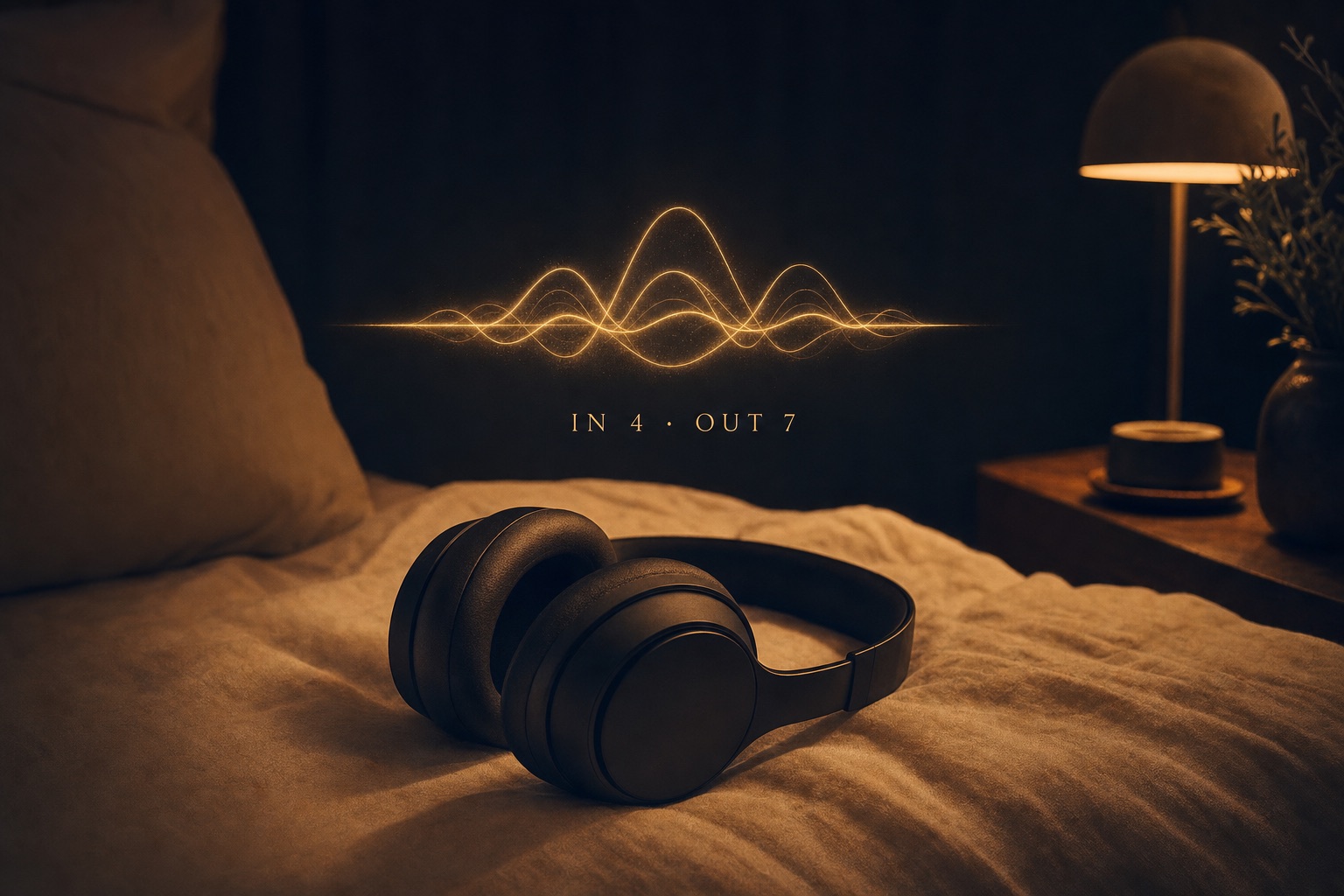
7 Nights to Body Freedom — a sleep-based therapeutic audio programme for women who have tried everything else.

This is the premise behind 7 Nights to Body Freedom — a sleep-based therapeutic audio programme developed specifically for women who have tried everything else.

Not a diet. Not an exercise plan. Not another thing to add to your already overfull life.

Seven audio tracks. Fifteen minutes each. Listened to in bed, as you fall asleep. The programme uses a precise combination of three therapeutic approaches delivered at the exact moment the brain is most receptive to change:

The Three-Layer Method

Theta binaural beats — a 6 Hz frequency that guides the brain into theta state within minutes. Using stereo headphones, two slightly different audio tones create a perceived third frequency that synchronises the brain's activity. This is the neurological foundation that makes everything else possible.

Ericksonian hypnotherapy — indirect, permissive therapeutic suggestion that works with the subconscious rather than against it. No commands. No affirmations you have to force yourself to believe. Instead: metaphors, stories, and gentle invitations that allow the subconscious to arrive at new beliefs on its own terms.

Somatic nervous system work — drawing on polyvagal theory, Internal Family Systems, and somatic experiencing to address the biological embedding of the protective patterns. Not just changing what you believe, but communicating safety to the nervous system at the level of the body itself.

You don't have to stay awake for any of it. You don't have to concentrate. You don't have to journal or do homework or think about any of this during your day.

You press play. You fall asleep.
Your brain does the work.

Section Seven

The Seven Nights —
One Complete Arc

Seven nights. One complete therapeutic arc.

Awareness → Safety → Release → Rewiring → New Identity

Night 1 — The Unveiling 1

Night 1

The Unveiling

Night 2 — The Safety Signal 2

Night 2

The Safety Signal

Night 3 — The Release 3

Night 3

The Release

Night 4 — The Wound 4

Night 4

The Wound

Night 5 — The Permission 5

Night 5

The Permission

Night 6 — The Rewiring 6

Night 6

The Rewiring

Night 7 — The Becoming 7

Night 7

The Becoming

Night1

The Unveiling

"Meeting the part of you that's been protecting you."

Gently guides her to recognise her body has been trying to keep her safe — not punish her. Names the subconscious protection pattern. Plants the seed: your weight was never the enemy. Creates the "oh my god, that's what's been happening" moment.

Night2

The Safety Signal

"Teaching your nervous system: the danger is over."

Deep nervous system regulation. Vagal toning, bilateral audio stimulation drawing on EMDR principles, somatic grounding. Communicates safety to the body beneath conscious thought.

Night3

The Release

"Letting go of what was never yours to carry."

Stored emotional weight — grief, shame, unexpressed anger, accumulated guilt. This session begins moving it. Women describe the sensation as something finally shifting that has been held in place for years.

Night4

The Wound

"Healing the story that started it all."

The deepest session. Using inner child work and belief-origin healing, this track gently guides you back to the moment a core belief was formed — and rewrites not the memory, but the conclusion you drew from it.

Night5

The Permission

"You are allowed to be seen. To take up space. To want."

Dismantles the deepest layer of the suppression wound. Reclaims desire, visibility, pleasure, and the simple revolutionary permission to exist fully — without apology.

Night6

The Rewiring

"Installing your new truth at the deepest level."

Direct subconscious belief installation. Old belief removal → new belief formation → somatic anchoring. The core messages — I am safe. I am enough. I am allowed to be free — delivered where they can finally be received.

Night7

The Becoming

"Meeting the woman you're already becoming."

Future self visualisation and identity integration. She meets the version of herself who is free. The subconscious, which cannot distinguish between a vividly imagined experience and a real one, begins orienting toward her. Pulling her forward.

Image 08 — The Becoming / Post Night 7

The seventh night doesn't end the work. It shows you what you're becoming.

Section Eight

Real Women.
Real Shifts.

Image 09 — Testimonials / Real Woman

What women say

"I have spent twenty years in therapy. I understand my patterns completely. Understanding has never been the problem — I could explain exactly why I eat the way I do and still find myself doing it at 10pm. After Night 4, something shifted that twenty years of understanding never touched. I don't fully know how to explain it. The urge just... isn't there the way it was."

Jessica T. · London · Age 44

"I fell asleep during Night 1. I woke up annoyed that I'd missed it and almost didn't count it. But something had already shifted. I usually reach for my phone when I wake at 3am — that anxious scrolling that leads to the kitchen. That night I just went back to sleep. I thought: that's odd. Then I thought: I wonder if it worked while I was asleep. I think it did."

Sarah M. · Sydney · Age 38

"The Mother Wound session undid something I didn't even know I was carrying. My mother put me on my first diet when I was nine. The session didn't make me blame her. It made me finally, physically, put down something I had been carrying since I was nine years old. I cried for an hour. And then I felt lighter than I have in years — and I don't mean that as a metaphor."

Rachel K. · Toronto · Age 51

"What I notice most is what isn't happening. I'm not counting. I'm not planning. I'm not making deals with myself. I'm not feeling guilty after meals. The mental overhead is just... gone. I didn't realise how much space the war was taking up until it got quieter."

Amanda L. · Manchester · Age 36

Section Nine

The Honest
Comparison

Image 10 — The Decision

Consider what most women spend trying to solve this problem:

A single session with a therapist costs between £80 and £200. The average course of therapy for disordered eating is 40–60 sessions. That's between £3,200 and £12,000 — with waiting lists months long in most countries.

A year of Weight Watchers costs approximately £300–£400 — and its own research shows the majority of members regain the weight they lost within two years.

Trauma-informed residential retreats start at £3,000 for a long weekend, with no continuity of care after you leave.

The Real Cost Comparison

Approach Typical Cost What You Get
Weekly therapy £10,000+/year Conscious understanding of patterns
Weight Watchers £300–400/year Calorie tracking — surface behaviour
Residential retreat £3,000–8,000 4 days, no follow-up
Personal trainer £2,000–5,000/year Physical behaviour change only
7 Nights to Body Freedom $147 / £127
one-time
Root cause healing · Lifetime access · Sleep-based · No effort required

Everything You Get — Lifetime

One payment. No subscription. No expiry.

7-Night Core Sequence

The complete therapeutic arc. ~15 min per night. Designed to be listened to as you fall asleep.

Continuation Library

6 additional tracks: The Craving Dissolve, Midnight Reset, Mirror Session, Before-Event Calm, Weekly Return, The Mother Wound.

Listener's Guide PDF

Programme map, science behind each night, and journaling prompts for deeper integration.

Members Area — All Devices

Private course platform. Stream on phone, tablet, or desktop. No downloads required.

Lifetime Access

No expiry. Return as many times as you need. The Replay Principle: each cycle deepens the work.

60-Day Guarantee

Full refund within 60 days. No forms, no proof required, no questions asked.

Begin Tonight — $147 →

Secure checkout · All major cards · PayPal · Apple Pay

60-Day Guarantee
🛡

60-Day Money-Back Guarantee

We know what it feels like to have tried something with hope and had it fail. If you listen to the programme and don't notice any shift in how you relate to food, your body, or yourself — email us within 60 days for a full refund. No forms. No explanations required.

Final

The Question Worth
Sitting With

Image 12 — Dawn / The Question

Here is the question nobody in the weight loss industry wants you to sit with, because the entire industry is built on you not answering it:

What if there is nothing wrong with you?

What if your body made the most intelligent decision available to it, given what it knew at the time? What if the weight was never punishment, and never failure, and never evidence of anything except a nervous system doing its job with extraordinary dedication?

What if the solution is not to force your body into submission — but to finally, gently, tell it:

"The danger is over. You can let go now. You are safe."

That is what these seven nights are designed to do. Not to fix you. You are not broken. To free you.

Because you have been carrying something that was never yours to carry. For longer than you should have had to. And your body has been waiting — not to betray you, not to resist you — but to hear that it is finally allowed to put it down.

Seven nights. Fifteen minutes each.

✦ ✦ ✦
Begin tonight

Tonight could be the first night
of something different.

You don't have to earn this. You don't have to be ready.
You just have to press play.

Begin Tonight — $147 →

$147 One-time · Lifetime access

✦ 60-day money-back guarantee · No questions asked

Image 13 — CTA Product / Lifestyle Flat Lay

This article is produced by SlimMind and contains a discussion of a SlimMind product. It is intended for educational and informational purposes. 7 Nights to Body Freedom is a personal development and wellness programme and is not a substitute for medical or psychological treatment. Individual results vary. If you are experiencing a diagnosed eating disorder, please consult your healthcare provider before beginning.

Sources: Kaiser Permanente ACE Study (Dr. Vincent Felitti); CDC Adverse Childhood Experiences Study; Comparative study on hypnotherapy vs. talk therapy efficacy; Phillippa Lally, UCL — European Journal of Social Psychology; Dr. Bessel van der Kolk, The Body Keeps the Score; PMC/NIH 2025 EFT study.